


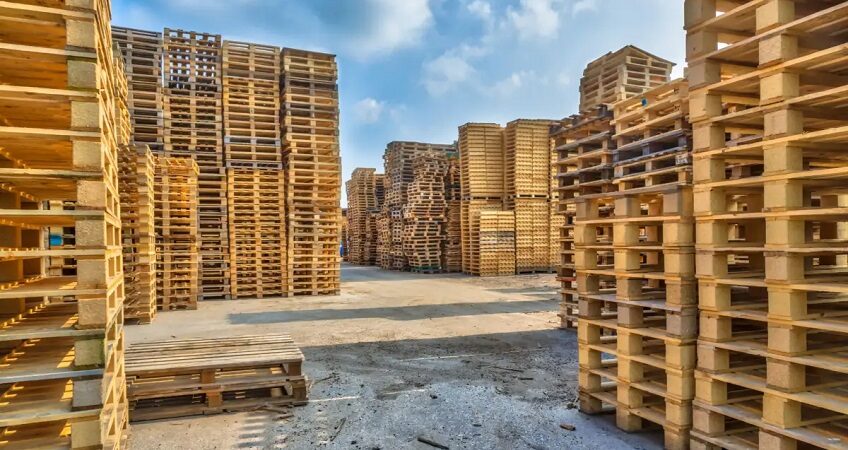
The transportation of goods has long since ceased to be haphazard. With the introduction of pallets – the universal wooden container – logistics and warehousing processes have become truly controlled, clear and fast, and the safety of goods has increased manifold. None of this would have been possible without the introduction of the wooden pallet standard.
The document regulates all the parameters of the unified container, as well as the method of its production, the quality of wood and the type of fasteners. Compliance with GOST ensures that the pallet really has the stated functional characteristics and that its dimensions correspond to those specified in the document. Standardized containers optimize storage and simplify handling operations.
New GOST 33757-2016 for pallets
Up until May 1, 2017, the parameters of wooden pallets were regulated by GOST 9078-84 and GOST 9557-87. After this date, a new standard for wooden pallets came into force – GOST 33757-2016.
GOST 9078-84 established general technical conditions for flat multi-turn wooden pallets with dimensions of 800×1200, 1000×1200, 1200×1600 and 1200×1800 mm. It described their types, dimensions, technical requirements, (including humidity not exceeding 22%), test methods, etc. This document was introduced to replace the previously used GOST 9078-74, GOST 19812-74 and GOST 9495-75. GOST 9557-87 was introduced on January 1, 1988 and concerned only pallets of size 800×1200 mm.
The new document essentially combined the two standards in force at the time, as well as ISO 8611, introduced on July 1, 2015, which described the methods of testing wooden pallets for strength. Currently, this GOST is accepted by pallet manufacturers as the main document for the production of wooden pallets of standard sizes.
What new was added to GOST 33757-2016
The new state standard, which was launched in 2017, besides generalizing previous documents, contained additions concerning various aspects. In addition to generalizing previous documents, the new state standard, which was launched in 2017, contained additions concerning various aspects.
Dimensions
The linear dimensional errors allowed in the manufacture of pallets were specified.
For the width and length of boards and checkers – ±5 mm, for their thickness – ±2 mm.
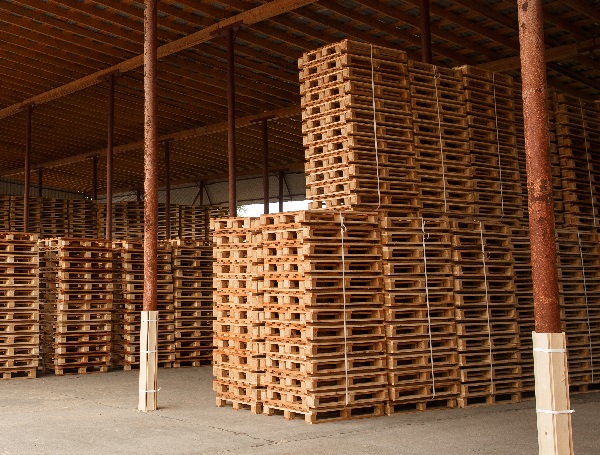
The updated GOST contains strict overall dimensions, where L – length, W – width and H – height:
- L – 1200, 1600, 1800 mm,
- W – 800, 1000, 1200 mm,
- H – 100, 150, 180 mm.
Limit deviations in all overall dimensions may not be greater than ±5 mm.
Weight
For pallets of different sizes, the maximum permissible weight has been prescribed. The most common pallets with overall dimensions of 800×1200 mm cannot be heavier than 40 kg, and 1000×1200 mm – 45 kg.
In addition, the term “uniformly distributed load” has been introduced. It means that the load on the pallet is uniformly distributed over the surface of the deck and occupies at least 85% of its area. For transport units formed in this way, there is a maximum gross mass, which depends on the type of cargo:
- for 800×1200 pallets – 1 ton if it is one large-sized load, and 1.25 tons if it is boxes that are not stitched together;
- for pallets 1000×1200 -1.35 t, if they are, for example, crates that are not stitched together.
Lumber and fasteners
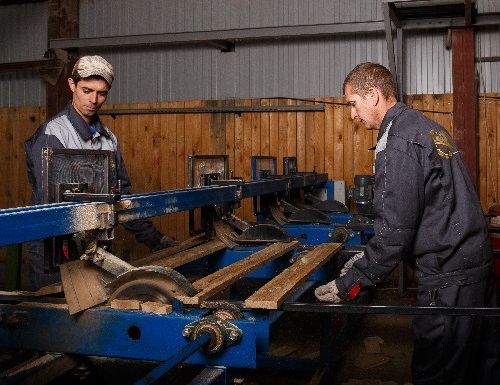
In contrast to previous standards, the new one indicated that lumber for the manufacture of pallets can not be lower than the second grade, allowed raw materials described in GOST 8486 (for deciduous) and GOST 2695 (for coniferous).
For the fastening of the construction elements, the specifics of the fasteners are clearly specified – only ring-rolled or screw nails (phosphatized or oxidized).
The new GOST allowed to meet the customer if he requests to produce pallets with modified structural elements due to technical necessity. In this case, the customer of the container must provide a drawing. The new GOST also allowed for the use of grade 3 wood in the manufacture of pallets, if the customer so requests.
Labeling
Labeling has been brought to a uniform standard. It is mandatory that the following information is printed on pallets or labels:
- the country code and name of the company that manufactured the packaging and its legal address;
- abbreviated designation of the packaging indicating type, purpose, dimensions and mass (net and gross in kg);
- name or code of the document with which the pallet manufacture is agreed, as well as the date of issue;
- recycling symbol (three arrows closing in a loop).
ISPM15 standard
In March 2002, the document ISPM15 (International Standards For Phytosanitary Measures) was adopted. This translates into Russian as International Standards for Phytosanitary Measures (ISPM15).
The document describes how pallets used for shipments abroad should be treated. Without a certificate of phytosanitary treatment, pallets cannot cross the border. The regulations were introduced to avoid the spread of pests (insect pests and disease-causing microorganisms) that may be present in the wood of pallets. These include insects from the families of Peelers, Hoodworms, Hornworms, Weevils, Weevils and others, as well as nematodes of the Pine Stem Nematode species.
Particularly important is a detailed description of the permissible processing of pallets (whole or as structural parts), and this must be indicated on the special marking.
HT corresponds to heat treatment – cyclic heating of wood to +56℃ for at least 30 minutes.
Chamber drying (KD), chemical pressure impregnation (CPI), and fumigation with methyl bromide (MB) in a specific pattern are also acceptable.
A properly treated pallet receives a certificate and a special branding.
It reflects the code of the processing method and the company that produced it, as well as the country code and the IPPC “spike” image.
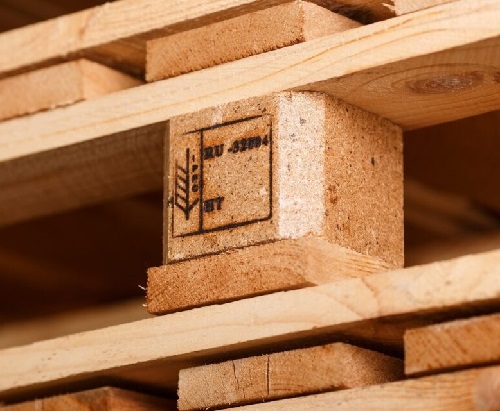
According to ISPM 15, not only wooden pallets, but also fastening wood, battens, coil boxes, etc. should be subjected to phytosanitary treatment. However, packaging made of chipboard, LDS, laminated plywood and other pressurized, glued and heated materials is not covered by this document.
Ruspallet Group produces pallets of different sizes and grades in strict compliance with the requirements of the current GOST for wooden pallets. We guarantee high quality and reliability of our products, which is confirmed by the relevant certificates. Contact our company and we will deliver your order anywhere in the country quickly and in perfect condition.